2026-03-04
What Is Generative AI? A Simple Explanation
Introduction
Over the past few years, Generative AI has moved from research labs into everyday life. Tools can now write essays, generate images, compose music, and even produce videos — all in seconds.
Applications powered by generative AI are used by millions of people daily, including systems like ChatGPT, Claude, and Gemini.
But what exactly is generative AI, and how does it work?
This article explains the concept in a simple and intuitive way, while also diving deep enough to understand why this technology is so powerful.
What Is Generative AI?
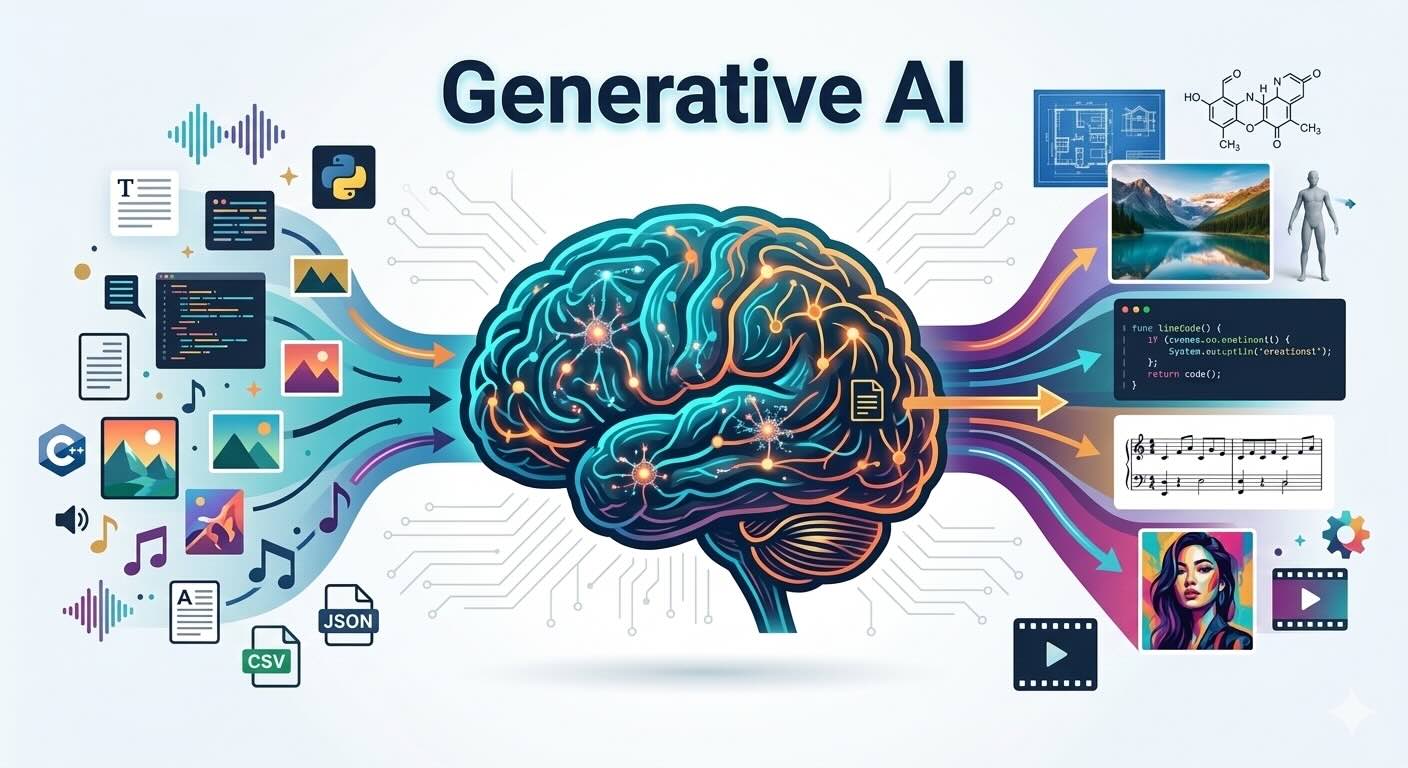
Generative AI is a type of artificial intelligence that creates new content.
Instead of simply analyzing or classifying existing data, generative AI produces entirely new outputs, such as:
- text
- images
- music
- video
- computer code
- 3D models
For example, if you ask an AI system to:
Write a short story about a robot exploring Mars.
A generative AI model will produce a brand new story that has never existed before.
Generative AI vs Traditional AI
Before generative AI became popular, most AI systems were designed for analysis and prediction.
Examples include:
| Traditional AI | What it does | |---|---| | Spam filters | Classify emails as spam or not | | Recommendation systems | Suggest movies or products | | Fraud detection | Identify suspicious transactions | | Image recognition | Detect objects in photos |
Generative AI does something fundamentally different.
Instead of answering “What is this?”, it answers:
“Create something new.”
This shift dramatically expands what AI can do.
Examples of Generative AI
Generative AI can produce many different types of content.
Text Generation
AI models can write:
- blog posts
- summaries
- emails
- computer code
- stories
Large language models such as GPT-4o and Claude 3.5 are designed for this purpose.
Image Generation
Image models can generate visuals from simple text prompts.
For example:
A futuristic city floating above the ocean at sunset.
The model produces a completely new image based on the description.
Popular image generation tools include:
- Midjourney
- DALL-E 3
- Stable Diffusion
Code Generation
Generative AI can also write and explain computer code.
Developers frequently use AI tools such as GitHub Copilot to:
- generate functions
- debug code
- explain complex algorithms
This is changing how software is written and maintained.
How Generative AI Works (Simplified)
Although generative AI may feel magical, the underlying idea is surprisingly simple.
Most modern generative AI systems are trained on massive datasets containing text, images, audio, and other content.
During training, the model learns patterns in the data.
For example:
- how words are typically arranged in sentences
- how colors and shapes appear in images
- how code structures programs
Once trained, the model can generate new outputs by predicting what comes next.
For example:
A language model generating text repeatedly predicts the most likely next word in a sequence.
Over thousands of steps, this process produces paragraphs, stories, or articles.
The Technology Behind Generative AI
Most modern generative AI systems rely on a neural network architecture called the Transformer.
This architecture was introduced in the famous research paper:
Attention Is All You Need.
Transformers are extremely good at processing sequences such as:
- text
- code
- audio
- video frames
They allow models to understand relationships between pieces of information, which is crucial for generating coherent content.
Large language models like GPT-4o and image models based on diffusion techniques rely on these advanced neural architectures.
Why Generative AI Is So Powerful
Generative AI represents a major technological shift for several reasons.
1. It lowers the barrier to creation
People can now create complex content simply by describing what they want.
You no longer need to be an expert in:
- writing
- graphic design
- coding
- video editing
AI can assist with the heavy lifting.
2. It dramatically increases productivity
Many professionals now use generative AI to:
- write drafts
- brainstorm ideas
- summarize research
- generate code
This allows people to focus on higher-level thinking rather than repetitive tasks.
3. It enables entirely new products
Generative AI makes possible new kinds of applications, including:
- AI assistants
- AI-powered search
- automated content generation
- AI game development tools
Many startups today are built entirely around generative AI capabilities.
Limitations of Generative AI
Despite its impressive abilities, generative AI still has important limitations.
Hallucinations
AI systems sometimes produce confident but incorrect information.
This happens because the model is generating text based on probability rather than verifying facts.
Lack of true understanding
Generative AI does not truly understand information the way humans do.
Instead, it learns statistical patterns in data.
Data dependence
AI models depend heavily on the data used during training.
Biases or gaps in the dataset can influence the outputs.
The Future of Generative AI
The field is evolving extremely quickly.
Researchers and companies are currently working on:
- multimodal AI that combines text, images, audio, and video
- AI agents that can perform complex tasks autonomously
- more efficient models that run on personal devices
- open-source AI systems that anyone can use
Many experts believe generative AI will become a core layer of modern software, similar to how the internet transformed computing decades ago.
Final Thoughts
Generative AI is not just another technological trend. It represents a new way for humans to interact with computers.
Instead of programming every detail manually, we can now describe our intentions and let AI generate solutions.
Understanding generative AI today is similar to understanding the internet in the early 1990s — the technology is still evolving, but its long-term impact could reshape entire industries.
For developers, creators, and businesses alike, learning how generative AI works is becoming an increasingly valuable skill.
Keep learning
- What Is AI and Why It Matters For You — the 2-minute primer if you're just getting started
- What Is Machine Learning? A Plain-English Guide — the foundation that generative AI is built on
- What Is an LLM? How Language Models Actually Work — a deeper look at the text-generating models like ChatGPT
- AI Hallucinations: Why AI Makes Things Up — understanding the key limitation mentioned above
- AI in 2026 So Far: Key Trends Everyone Should Know — where generative AI is heading next
Continue reading
2026-03-10
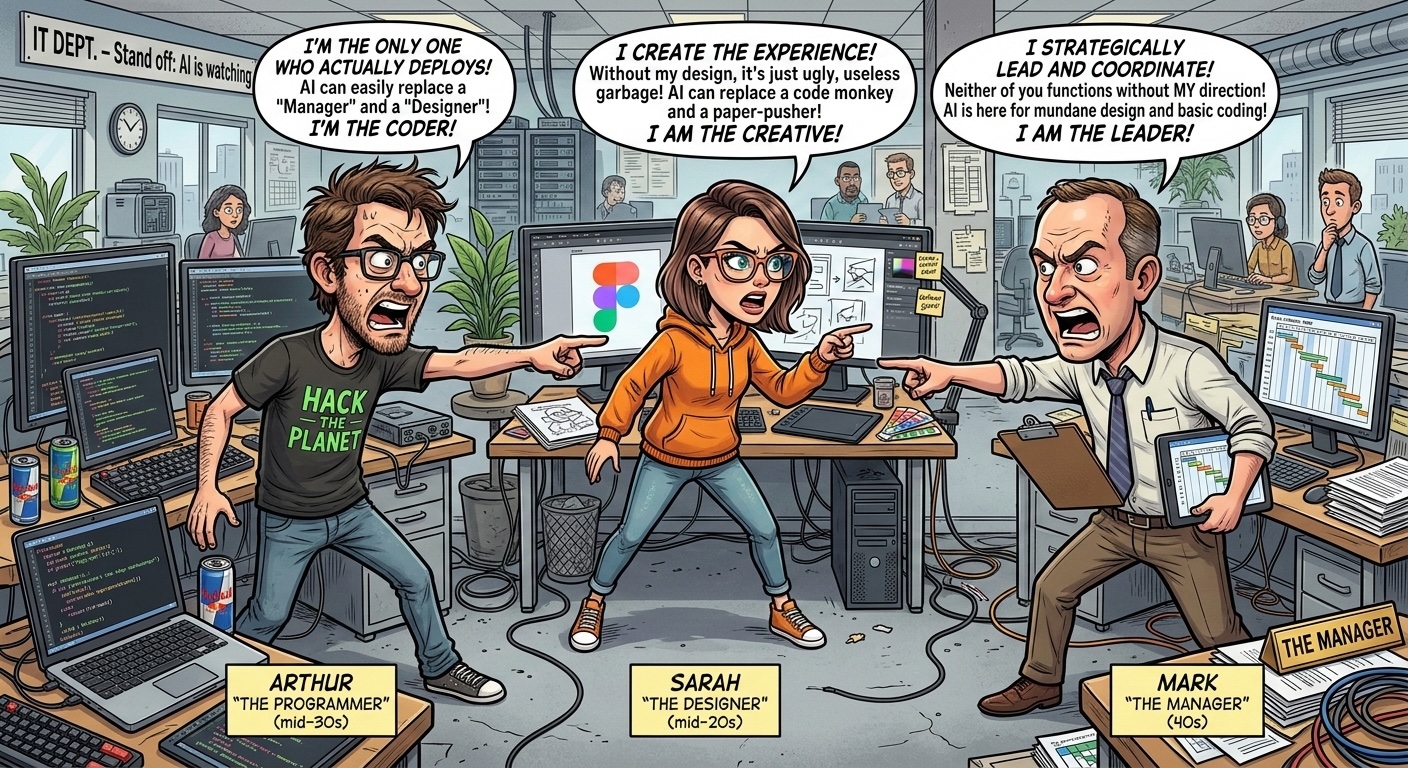
The AI Mexican Standoff in Tech
2026-03-10
I Vibe Coded an IntelliJ Plugin in 30 Minutes With Zero Plugin Dev Experience

2026-03-09
Should You Still Learn to Code in 2026?
2026-03-08
AI in 2026 So Far: Key Trends Everyone Should Know

2026-03-07
AI Hallucinations: Why AI Makes Things Up (And What to Do About It)
2026-03-05