2026-03-08
AI in 2026 So Far: Key Trends Everyone Should Know
Introduction
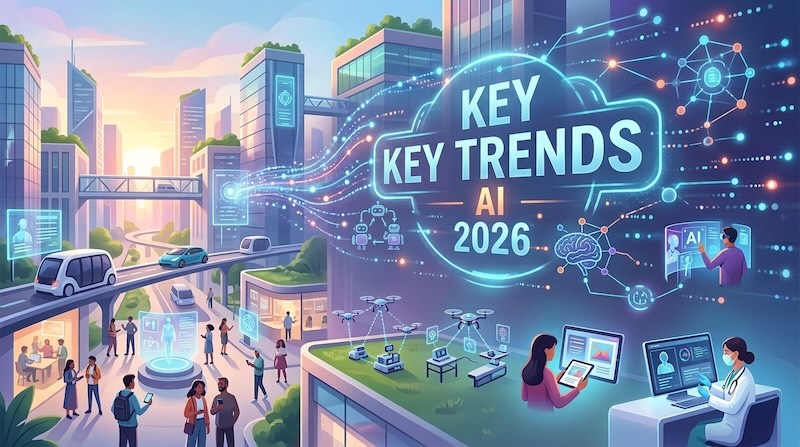
Artificial Intelligence continues to evolve at an incredible pace. What felt groundbreaking just a year ago is already becoming standard infrastructure for companies, developers, and creators.
In 2026, AI is no longer just about chatbots or generating images. It is rapidly becoming a core layer of software, transforming how we build products, automate work, and interact with computers.
This article summarizes the most important AI trends of 2026 so far and what they mean for the near future.
1. AI Is Becoming the Default Interface
One of the biggest shifts happening right now is that AI is becoming the primary interface for software.
Instead of navigating menus and forms, users increasingly interact with applications through natural language.
Examples include:
- AI copilots embedded inside software tools
- Conversational interfaces replacing search boxes
- AI assistants integrated directly into operating systems
This trend is turning AI models into universal interpreters between humans and software.
2. The Rise of AI Agents
Another major trend is the rapid development of AI agents.
Unlike traditional AI tools that simply generate responses, agents can:
- plan multi-step tasks
- interact with APIs
- execute workflows
- use external tools
Developers are experimenting with systems where AI can:
- write code
- analyze data
- automate business processes
- operate software autonomously
While still early, agent-based systems could dramatically change how digital work gets done.
3. Multimodal AI Is Becoming Standard
AI models are no longer limited to a single type of input.
Modern systems increasingly support multimodal interaction, meaning they can process:
- text
- images
- audio
- video
- documents
- code
This enables entirely new use cases such as:
- visual reasoning
- AI-powered video understanding
- document analysis
- real-world problem solving using images
Multimodal models bring AI closer to human-like perception of information.
4. Open-Source AI Is Catching Up
For a while, cutting-edge AI capabilities were mostly controlled by large tech companies. That situation is changing quickly.
The open-source ecosystem is rapidly improving with models that can run locally on consumer hardware.
Advantages of open-source AI include:
- transparency
- customization
- lower long-term costs
- privacy
Many developers now build applications using locally hosted models instead of relying exclusively on external APIs.
This trend is accelerating innovation across the entire ecosystem.
5. AI Is Moving From Demos to Real Products
In previous years, many AI projects were impressive but experimental.
In 2026, we are seeing a shift toward production-grade AI systems.
Companies are focusing on:
- reliability
- evaluation frameworks
- cost optimization
- real-world integrations
The result is a growing number of products where AI is not just a feature but the core engine of the product.
6. Smaller Models Are Becoming More Powerful
Another surprising trend is the rapid improvement of smaller AI models.
Instead of relying solely on massive models with hundreds of billions of parameters, researchers are creating efficient models that deliver strong performance with far fewer resources.
Benefits include:
- faster inference
- lower hardware requirements
- lower operating costs
- local deployment
This shift is making AI accessible to individual developers and small teams.
7. AI Hardware Is Becoming a Strategic Battleground
As demand for AI grows, hardware has become a critical bottleneck.
GPUs and specialized AI accelerators are now among the most important pieces of infrastructure in the tech industry.
Competition is intensifying across:
- GPU manufacturers
- cloud providers
- AI chip startups
The availability of compute power will strongly influence the speed of AI progress in the coming years.
8. AI Is Changing How Software Is Built
Software development itself is being transformed by AI.
Developers increasingly use AI tools to:
- generate code
- debug issues
- explain complex systems
- write documentation
- refactor large codebases
This doesn't eliminate developers, but it changes the role of programmers toward architecture, problem solving, and system design.
What Comes Next?
Although the progress of the last few years has been impressive, the industry still faces important challenges:
- reliability and hallucinations
- alignment and safety
- compute limitations
- regulatory frameworks
At the same time, the potential impact of AI continues to grow.
Many experts believe we are still in the very early stages of the AI era, similar to where the internet was in the early 1990s.
Final Thoughts
The first months of 2026 confirm that artificial intelligence is transitioning from an emerging technology into foundational infrastructure for modern software.
Key trends to watch going forward include:
- more capable AI agents
- improved multimodal systems
- stronger open-source models
- AI-native applications
The pace of innovation shows no sign of slowing down, and the coming years will likely reshape entire industries.
If you're building products, learning new skills, or simply following technology, understanding these trends is becoming increasingly important.
Related reading
- What Is Generative AI? A Simple Explanation — the technology driving most of these trends
- Should You Still Learn to Code in 2026? — how AI is changing software development
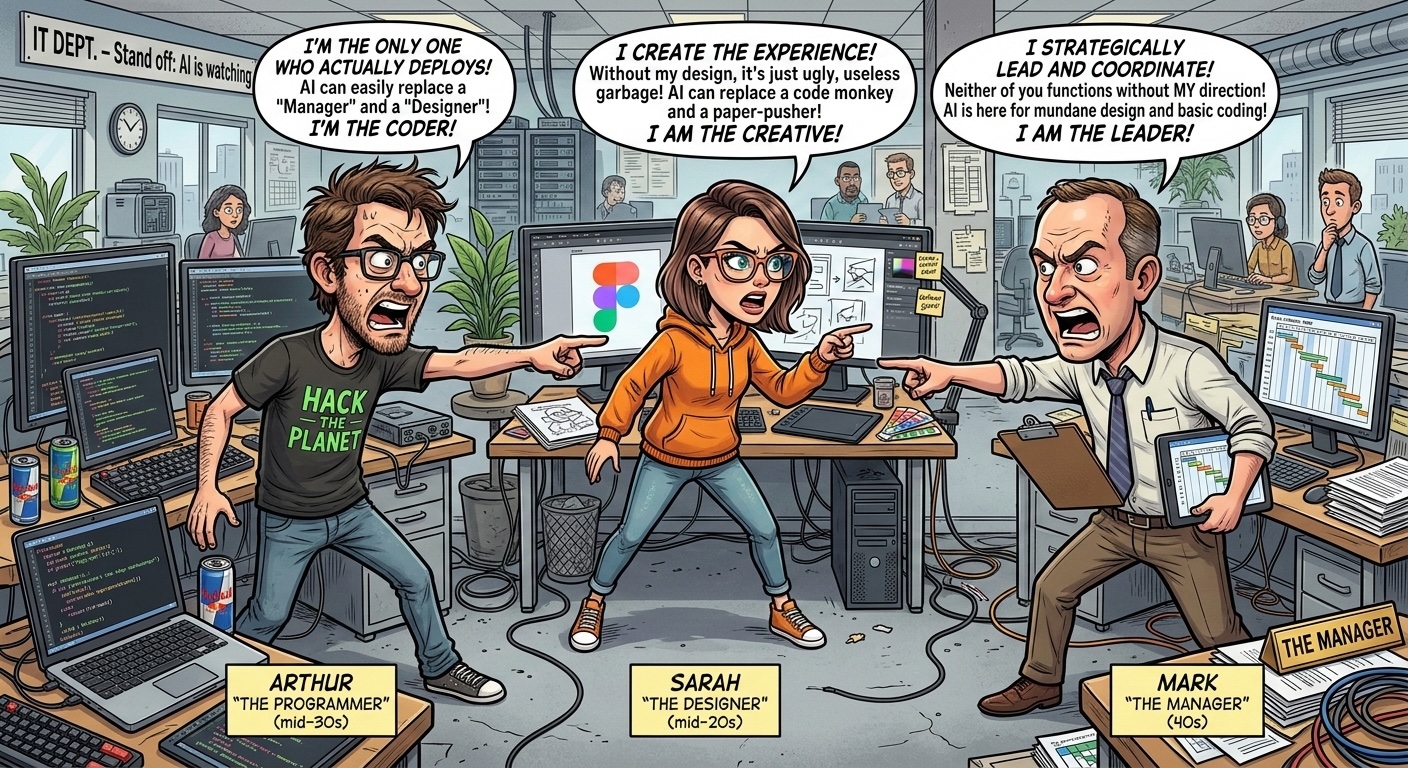
- The AI Mexican Standoff in Tech — how these trends are reshaping roles inside tech companies
Continue reading
2026-03-10
The AI Mexican Standoff in Tech
2026-03-10
I Vibe Coded an IntelliJ Plugin in 30 Minutes With Zero Plugin Dev Experience

2026-03-09
Should You Still Learn to Code in 2026?

2026-03-07
AI Hallucinations: Why AI Makes Things Up (And What to Do About It)
2026-03-05
What Is Machine Learning? A Plain-English Guide
2026-03-04